Cold Chain Management for Pharmaceutical Raw Materials: A Comprehensive Guide for Manufacturers
The stability of pharmaceutical raw materials is a major concern in the global healthcare industry. In particular, APIs and certain excipients require controlled storage conditions to maintain quality. Without proper cold chain management, chemical degradation can occur, resulting in products that do not meet specifications. Therefore, investing in cold chain infrastructure is no longer an option but a necessity.
Cold chain refers to a logistics system that maintains controlled temperatures from the manufacturer to the end user. In the pharmaceutical context, this includes the storage, transportation, and handling of temperature-sensitive raw materials. Beyond just refrigeration, the cold chain involves continuous monitoring and thorough documentation. This ensures product integrity can be verified at every stage of distribution.
Why Some APIs Require Cold Chain
First, some APIs have complex molecular structures that are susceptible to thermal degradation. For example, beta-lactam antibiotics like amoxicillin can undergo hydrolysis at high temperatures. This results in decreased pharmacological potency and increased impurities. Therefore, storage at 2-8°C is highly recommended.
Furthermore, biological APIs such as proteins and peptides are highly sensitive to temperature fluctuations. Protein denaturation can occur even with brief exposure outside the optimal temperature range. Consequently, biological activity is completely lost. Therefore, a cold chain with detailed temperature mapping is essential.
Furthermore, some excipients, such as gelatin, also require special storage conditions. High humidity combined with high temperatures can encourage microbial growth. Microbiological contamination of excipients can compromise the safety of the final product. Therefore, temperature and humidity control must be carried out simultaneously.
Components of an Effective Cold Chain Infrastructure
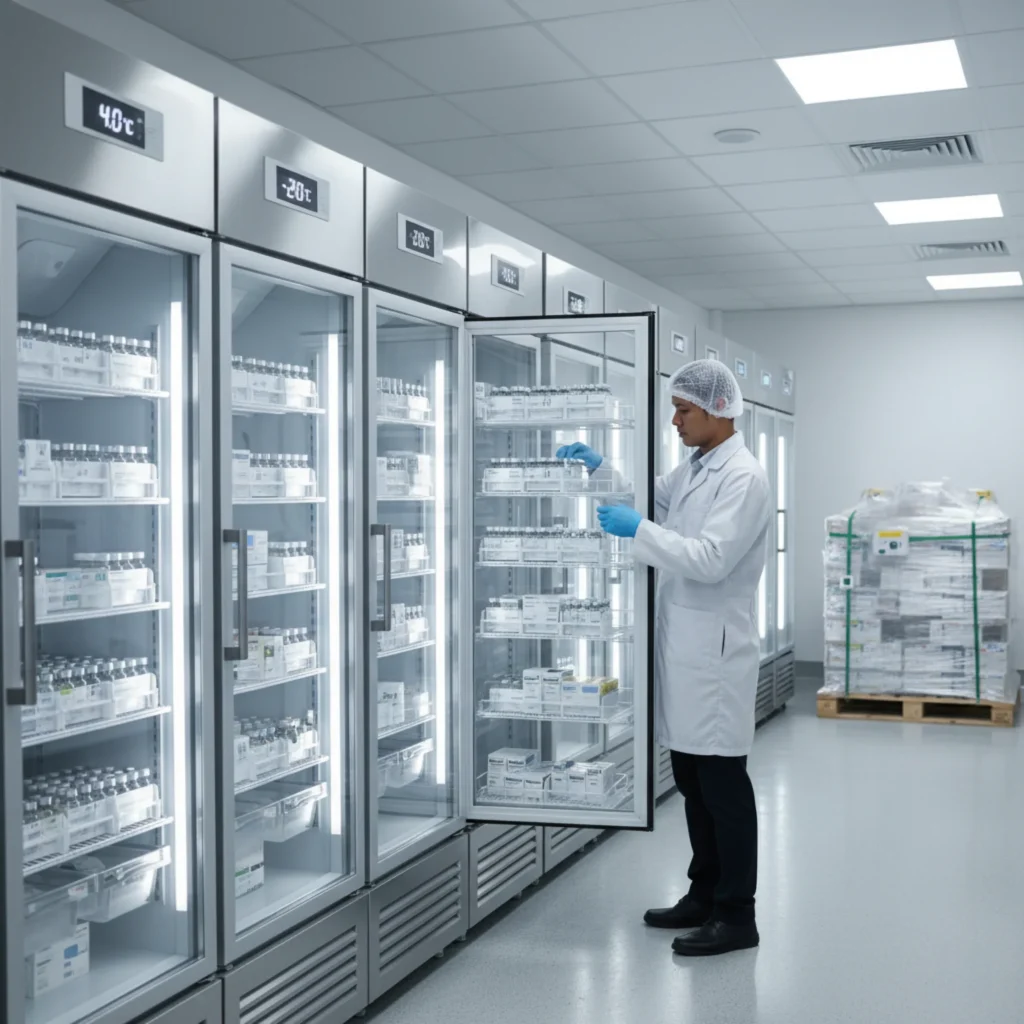
Cold storage rooms must be equipped with redundant refrigeration systems to prevent failure. Multiple cooling units with backup power supplies ensure continuous operation. Furthermore, an integrated alarm system provides real-time notification of temperature deviations. As a result, corrective intervention can be implemented before damage occurs.
Next, temperature and humidity sensors must be placed in various zones within the cold room. Data loggers automatically record environmental parameters every few minutes. A cloud-based system then integrates the data for trend analysis and compliance reporting. This ensures objective evidence of storage conditions is always available.
Equally important, material handling equipment such as forklifts must also minimize exposure time. Cold room entry and exit protocols must be efficient to reduce thermal cycling. Furthermore, staff handling materials must be trained in aseptic and safety procedures. As a result, the risk of cross-contamination can be significantly minimized.
Best Practice in Cold Chain Transportation
Transport vehicles must be equipped with an insulated body and a reliable refrigeration unit. Pre-cooling the compartments before loading ensures temperature stability from the start of the journey. Furthermore, GPS tracking with temperature monitoring allows for real-time visibility. This ensures any anomalies can be detected and acted upon quickly.
Meanwhile, secondary packaging using cool packs or dry ice provides an additional layer of protection. Thermal validation studies determine the duration of protection under various ambient conditions. As a result, optimal packaging formulations for each distribution route can be designed. Therefore, the probability of temperature excursion is drastically reduced.
Furthermore, transfers between warehouses or distribution centers are critical points in the cold chain. Dock-to-dock protocols minimize exposure to ambient temperatures. Furthermore, temperature history documentation must accompany each shipment. This allows the recipient to verify that the material arrives in optimal condition.
Common Challenges in Cold Chain Implementation
Despite its importance, cold chain implementation faces several practical challenges. First, the initial investment in infrastructure is substantial and requires a long-term return on investment. However, the costs of product degradation and recalls far outweigh preventive investments. Therefore, a cost-benefit perspective must consider risk mitigation.
Second, electrical power stability remains an issue in several regions of Indonesia. Backup generators are available, but power transitions can cause brief temperature spikes. Therefore, a robust Uninterruptible Power Supply (UPS) system is highly recommended. This ensures a seamless transition.
Third, human error in monitoring and documentation often occurs. Automated systems reduce reliance on manual checking. However, staff training remains essential to understand the criticality of the cold chain. Consequently, the combination of technology and human resource competency produces the most reliable system.
Cold Chain Regulation and Compliance in Indonesia
The Food and Drug Authority (BPOM) establishes specific requirements for the distribution of raw materials requiring a cold chain. Good Distribution Practice (GDP) requires documented temperature monitoring during storage and transit. Furthermore, regular audits verify compliance with established protocols. This ensures traceability and accountability.
Additionally, warehouse certifications such as ISO 9001 and GDP serve as indicators of cold chain capability. External auditors evaluate infrastructure, procedures, and training records. Consequently, certification provides clients with confidence in the supplier's capabilities. Therefore, selecting a certified distributor is a risk mitigation strategy.
Meanwhile, the trend toward digitizing documentation makes compliance more efficient. Blockchain technology is even being explored for immutable recordkeeping. Full transparency in the supply chain increases trust among all stakeholders. As a result, the pharmaceutical supply chain becomes more resilient to disruption.
PT BUN DANG PHARMA: Integrated Cold Chain Solutions
Understanding the criticality of the cold chain, PT BUN DANG PHARMA has invested in state-of-the-art infrastructure in Tangerang. Our 2,000 m² warehouse is equipped with multiple large-capacity cold rooms. More importantly, a 24/7 monitoring system with SMS and email alerts ensures a quick response to any deviations.
Visit www.bundang.id to learn more about our cold chain capabilities. We offer temperature mapping and validation studies to ensure compliance. In addition, our refrigerated vehicle fleet serves distribution throughout Java and Sumatra with strict SLAs.
Furthermore, our integrated ERP system provides full visibility into inventory and temperature history. Clients can access real-time data through an online portal at any time. This results in more accurate and timely data-driven decision-making. Our technical support team is also ready to provide consultation on storage requirements for each material.
Future Innovations in Pharmaceutical Cold Chain
IoT (Internet of Things) technology will further transform cold chain monitoring. Miniature sensors with long battery life can be attached directly to packaging. Real-time streaming data provides granular visibility down to the pallet level. This allows for the identification of anomalies with high precision.
Additionally, predictive maintenance using machine learning will optimize equipment reliability. Algorithms predict potential failures before they occur based on historical data. As a result, unplanned downtime can be drastically minimized. Therefore, investing in cold chain digitalization will provide a competitive advantage.
Not to be outdone, sustainable refrigeration technology using environmentally friendly refrigerants is developing rapidly. Hydrocarbons and CO2 are becoming more eco-friendly alternatives to HFCs. Furthermore, solar-powered cold storage is becoming viable in areas with limited grid access. As a result, the cold chain can be expanded even to remote areas.
Conclusion
In short, cold chain management is the backbone of maintaining the quality of sensitive pharmaceutical raw materials. Investment in infrastructure and monitoring technology ensures product stability. Meanwhile, compliance with regulations and best practices builds trust with clients and regulators.
PT BUN DANG PHARMA is committed to providing reliable and compliant cold chain solutions. With modern facilities and an experienced team, we are ready to be your strategic partner. Let's work together to ensure every drug molecule reaches patients in optimal condition to deliver maximum therapeutic benefits.